28 August 2026
High-Altitude Glacier Collapse Triggers Disaster in Nepal
A catastrophic flash flood struck the high-altitude border region between Nepal and Tibet after a massive glacial collapse occurred near Langtang Lirung. The sudden avalanche of ice and debris temporarily dammed the river channel, creating a natural barrier that quickly breached and unleashed a rapid wall of water, mud, and sediment downstream. The surge swept through river basins along the Lhende Khola, Bhote Koshi, and Trishuli river systems, destroying critical infrastructure, washing away bridges, and severing access around Gyirong Port—Nepal's main land border trading link with Tibet. Emergency operations led by the Nepalese Army continue around the clock, though authorities warn that secondary flooding risks remain acute due to unstable debris lakes upstream.
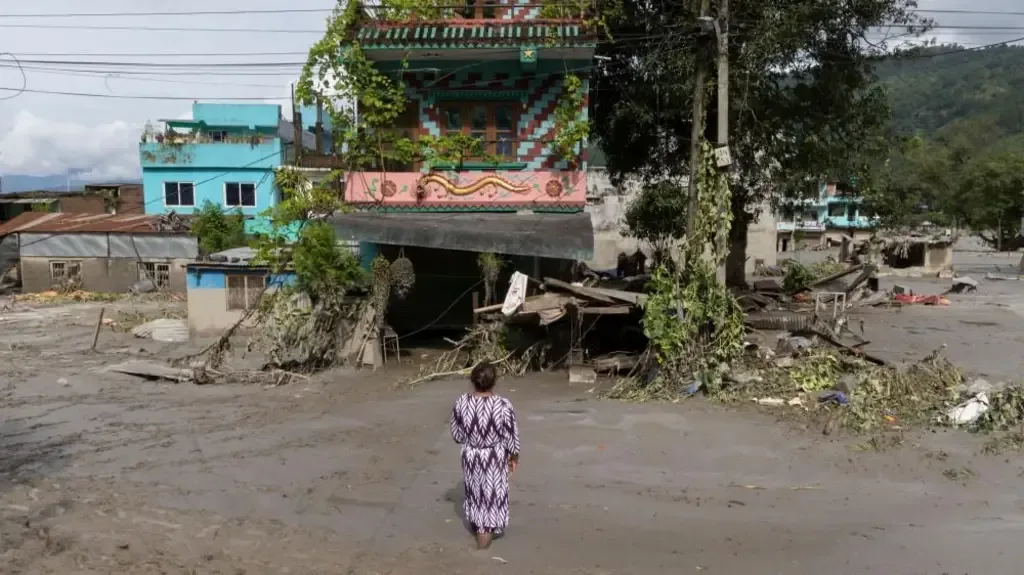
KATHMANDU — A catastrophic flash flood struck the high-altitude border region between Nepal and Tibet on Wednesday morning, leaving hundreds dead, hundreds missing, and thousands stranded in mud-filled valleys. The event tore through towns, destroyed critical bridges, and submerged entire river basins along the Lhende Khola, Bhote Koshi, and Trishuli river systems.
The tragedy unfolded when a massive high-altitude glacier collapse occurred near the mountain peak of Langtang Lirung on the Nepali side of the border. According to official reports, ice and debris broke free high on the mountain, crashing roughly 1,200 vertical meters into the valley below. The resulting avalanche of ice and rock temporarily dammed the river channel; when the natural barrier breached, it released a rapid wall of water, mud, and heavy sediment downstream.
Devastation Across the River Valleys
- Surging Water Levels: Water levels in downstream systems like the Trishuli River surged rapidly within minutes, carrying massive sediment and huge boulders along the channel.
- Swept-Away Infrastructure: Powerful torrents ripped through villages, swept away key pedestrian bridges, and destroyed parts of the under-construction Trishuli-I hydropower plant. It also severed access around Gyirong Port—Nepal's largest land border crossing and trading link with Tibet.
- Rescue Operations: The Nepalese Army has carried out extensive rescue operations, extracting hundreds of trapped residents and workers—including over 350 people saved from a flooded hydropower tunnel.
International Impact and Response
| Category | Key Statistics & Details |
|---|---|
| Confirmed Casualties | 389+ confirmed dead in Nepal; 3 confirmed dead in Tibet |
| Missing Persons | Over 900 unaccounted for in Nepal; 558 missing in Tibet |
| Foreign Nationals | Hundreds of foreign tourists and pilgrims missing, including over 290 Indian citizens and dozens from the US, UK, Ukraine, Malaysia, and Australia |
| Emergency Relief Aid | $500,000 pledged by the US; £5 million from the UK; 10 metric tons of relief supplies from India; $31 million emergency Red Cross appeal |
Mounting Threats and Ongoing Relief
Rescue efforts led by local authorities and military forces continue around the clock, though bad weather and destroyed road networks make access difficult. Disaster management officials warn that secondary flooding risks remain high as rising water lakes dammed by debris high up the river basin threaten to burst and trigger additional torrents into downstream communities.
Scientists point to accelerating glacier instability across the Himalayas as a growing threat to mountain communities and downstream populations, highlighting how sudden natural disasters in high-altitude zones can rapidly transform into regional humanitarian emergencies.